Allergy & Anaphylaxis
Allergies
At Saffron Valley Collegiate, the health, safety and wellbeing of all our pupils is a priority. We recognise that allergies can have a significant impact on children and young people and are committed to providing a safe, supportive and inclusive environment for pupils living with allergies.
We take allergy management seriously and have arrangements in place to reduce the risk of exposure, support pupils with known allergies and ensure that staff are prepared to respond appropriately to allergic reactions.
Our Approach to Allergy Management
Our whole school approach to allergy management includes:
-
Working closely with parents and carers to understand each pupil’s individual allergy needs.
-
Recording relevant allergy information and ensuring appropriate staff are made aware of it.
-
Developing an Individual Healthcare Plan where required.
-
Ensuring prescribed medication, including adrenaline auto-injectors (AAIs), is managed appropriately and readily accessible when needed.
-
Providing appropriate information and training for staff.
-
Taking reasonable steps to reduce the risk of pupils being exposed to known allergens.
-
Having clear procedures for responding to suspected allergic reactions and anaphylaxis.
-
Regularly reviewing our allergy arrangements and responding to changes in a pupil’s medical needs.
What Parents and Carers Need to Tell Us
Parents and carers should inform the school as soon as possible if their child has:
-
A diagnosed food or non-food allergy.
-
A history of anaphylaxis or a previous severe allergic reaction.
-
Been prescribed an adrenaline auto-injector.
-
Had any changes to their allergy, medication or emergency treatment.
Please ensure that the school has up-to-date information about your child’s allergy and that any required medication is provided to the school in accordance with our medication procedures.
Parents and carers should also inform us promptly of any changes to their child’s Individual Healthcare Plan or emergency medication.
Individual Healthcare Plans
Where appropriate, the school will work with parents/carers and relevant healthcare professionals to develop an Individual Healthcare Plan (IHP).
An IHP provides staff with clear information about a pupil’s medical needs, known triggers, symptoms, medication and the action to be taken in an emergency.
Plans are reviewed periodically and whenever there is a significant change in a pupil’s medical circumstances.
Adrenaline Auto-Injectors
Pupils who have been prescribed adrenaline auto-injectors should have their medication available in school in accordance with their Individual Healthcare Plan and the school’s medication procedures.
Staff who may need to respond to an allergic reaction receive appropriate information and training. Emergency adrenaline auto-injectors are managed and stored in accordance with our Allergy Safety Policy and relevant guidance.
In the event of a suspected anaphylactic reaction, staff will follow the school’s emergency procedures and seek emergency medical assistance where required.
Reducing the Risk of Exposure
We recognise that it is not always possible to create an entirely allergen-free environment. Instead, we take reasonable and proportionate steps to reduce the risk of exposure to known allergens.
This includes appropriate communication with staff, consideration of allergy risks during school activities and trips, and appropriate arrangements for food and catering.
We ask pupils, parents and carers to support the school by following our procedures and providing accurate and up-to-date information about allergies.
Catering and Food Allergies
Where food is provided by the school or through our catering arrangements, appropriate information about declared allergies will be considered as part of our food safety and allergy management procedures.
Parents and carers should ensure that the school is aware of any diagnosed food allergies and provide any information requested about their child's dietary requirements.
Further information about food provision and dietary requirements can be found via the links below:
Trips, Activities and Events
Allergy management is considered as part of the planning process for school trips, visits, activities and other events.
Where a pupil has a known allergy, relevant staff will be made aware of the pupil’s needs and appropriate medication and emergency arrangements will be considered before the activity takes place.
Staff Awareness and Training
We ensure that relevant staff have access to appropriate information and training so that they understand their responsibilities in relation to pupils with allergies.
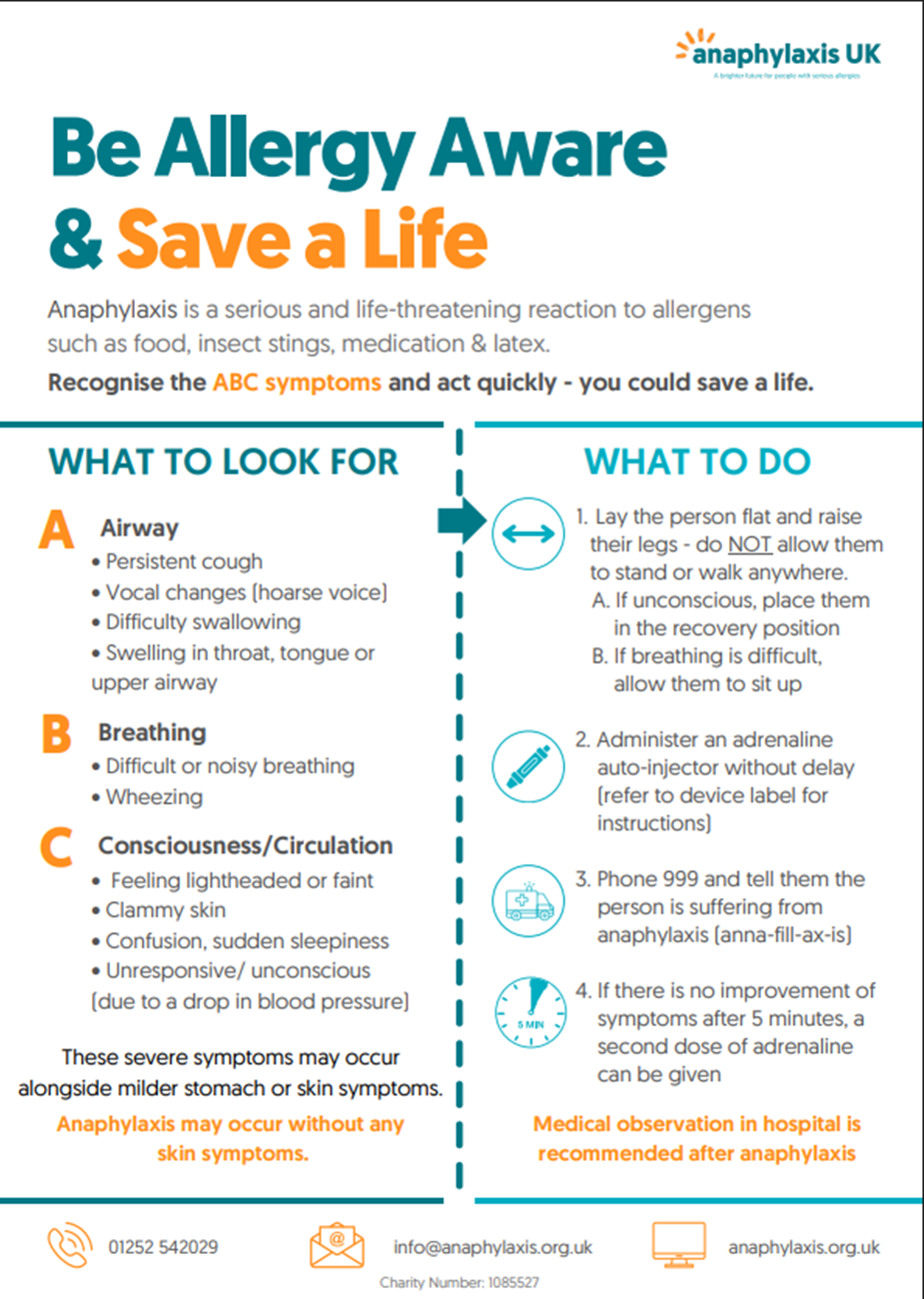
Staff are made aware of the signs and symptoms of allergic reactions and anaphylaxis, the importance of acting promptly, and the procedures to follow in an emergency.
Emergency Response
Anaphylaxis is a severe and potentially life-threatening allergic reaction that requires immediate action.
If a pupil is suspected of experiencing anaphylaxis, staff will follow the school's emergency procedures, administer prescribed emergency medication in accordance with the pupil's plan and training, and contact the emergency services as appropriate.
Our priority is always to respond quickly and appropriately while ensuring the pupil receives the necessary medical assistance.
Working Together
Effective allergy management depends on good communication between the school, pupils, parents and carers, healthcare professionals and other relevant staff.
We encourage parents and carers to contact the school if they have any concerns about their child’s allergy management or if their child’s medical needs change.
Allergy Safety Policy
Our Allergy Policy provides further information about our approach to allergy management, including responsibilities, risk reduction, staff training, medication, emergency procedures and arrangements for supporting pupils with allergies.
For questions about allergies or to update your child's medical information, please contact the school office.
NHS advice on anaphylaxis and how to use an adrenaline auto-injector
How to use an adrenaline auto-injector
There are different types of adrenaline auto-injectors and each one is given differently.